






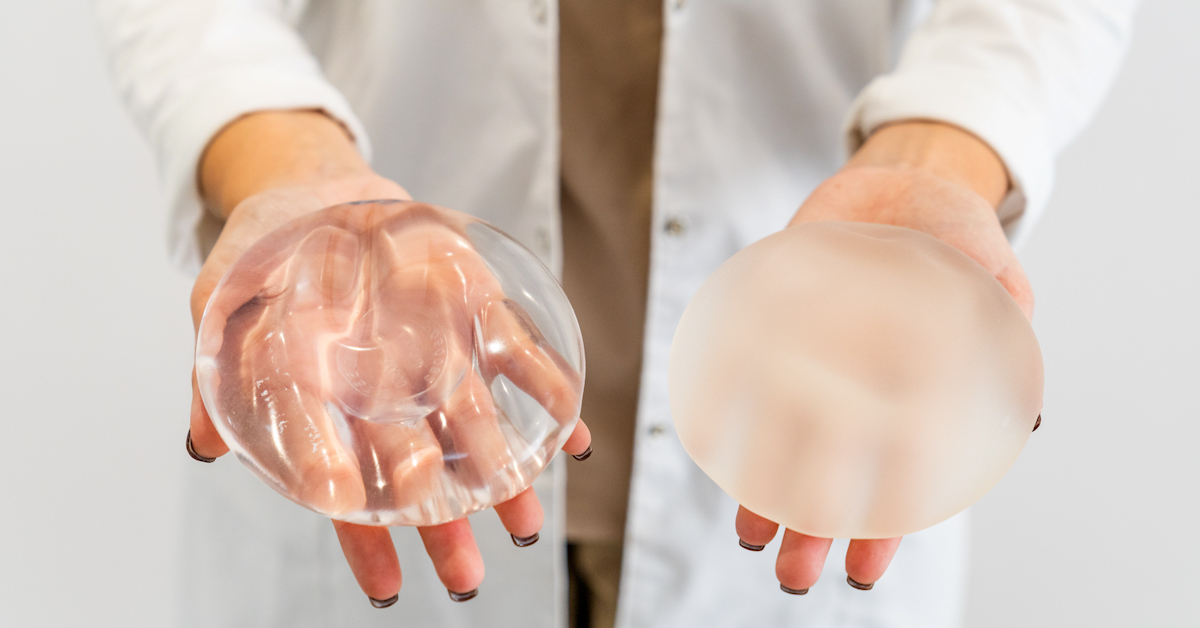
Understanding the Different Approaches to Breast Augmentation
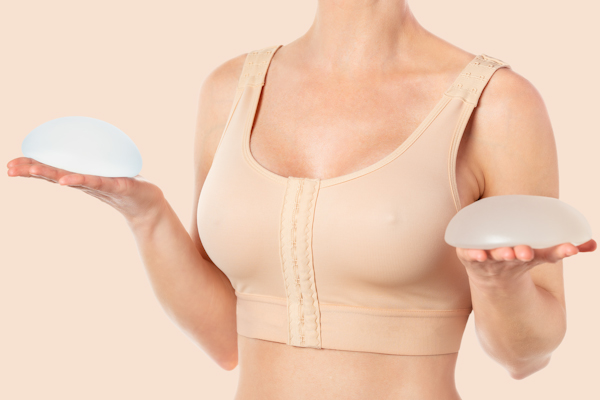
Breast augmentation with implants remains an established option for patients who want a noticeable increase in breast volume. Implants are available in different sizes and profiles, allowing the surgeon to plan the shape and projection of the breasts in relation to the patient’s chest and existing tissue.
Fat transfer breast augmentation takes a different approach. Fat is removed from another area of the body through liposuction, prepared for transfer, and carefully injected into the breasts. The technique can provide additional volume while also allowing contour refinement in the donor area.
For selected patients, these techniques can also be combined. Known as hybrid breast augmentation, this approach uses an implant to provide the main volume enhancement, while transferred fat can help refine specific areas of the breast contour.
Although all three approaches aim to improve breast shape and volume, they are not interchangeable. The amount of enlargement desired, the patient’s existing breast tissue, skin quality, and available donor fat all influence which option may be appropriate.
Breast Implants: A More Predictable Approach to Volume and Projection
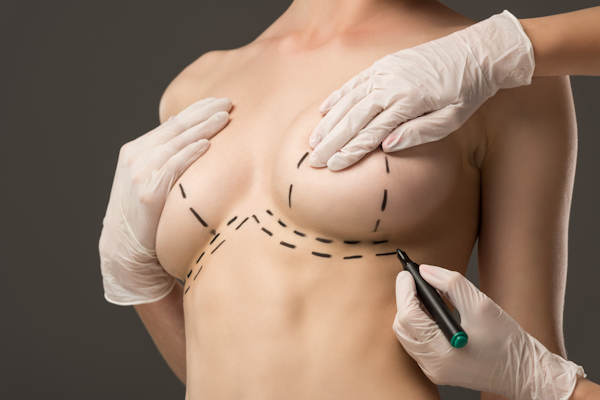
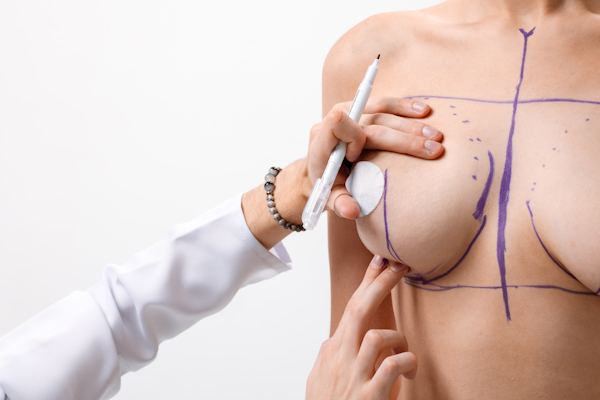
Breast implants offer a way to plan a more defined increase in breast volume. During surgery planning, the surgeon considers the width of the breast base, the structure of the chest wall, the amount of existing breast tissue, skin elasticity, and the patient’s preferred size and shape.
Implant selection involves more than choosing a particular cup size. The implant must fit the patient’s anatomy, and its width and profile influence how the breasts project and how the final result relates to the rest of the body.
One of the main advantages of breast implants is the range of volume options available. For patients who want a significant increase in breast size, implants can offer possibilities that fat transfer alone may not achieve.
However, the final appearance still depends on the patient’s anatomy and healing. An implant that is too large or poorly suited to the breast dimensions may not create the balanced result the patient wants. Careful planning is therefore essential.
Breast implants also require long-term consideration. They are not lifetime devices, and although replacement is not automatically necessary after a fixed number of years, complications, changes in breast tissue, or evolving aesthetic preferences may lead to further surgery. Patients should understand the importance of appropriate follow-up before deciding on implant-based augmentation.
Breast Fat Transfer: Enhancing the Breasts with Your Own Tissue
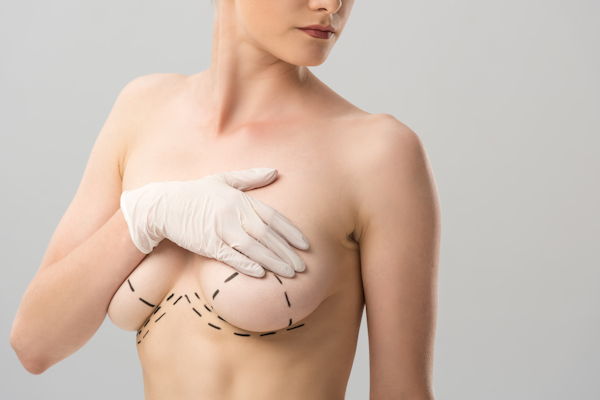
For patients who prefer not to have breast implants, fat transfer can be an alternative worth considering. Also known as fat transfer breast augmentation, the procedure uses the patient’s own fat to increase breast volume and improve selected contours.
The process begins with liposuction to collect fat from a suitable donor area, such as the abdomen, flanks, or thighs when appropriate. The fat is then prepared and injected into carefully selected areas of the breasts.
Because the procedure uses the patient’s own tissue, it does not require an implant. It may appeal to patients who want a relatively subtle enhancement rather than a dramatic change in size. Fat transfer can also be useful for refining certain contour irregularities or addressing selected areas of asymmetry.
There is, however, an important limitation: the amount of fat available for transfer and the amount that survives after injection both influence the result. Not all transferred fat remains in the breasts, and the final volume can vary between patients.
This means that fat transfer is not necessarily the best option for someone who wants a substantial increase in breast size. The technique is most suitable when the patient’s expectations are compatible with the degree of enhancement that can realistically be achieved.
Breast Implants vs Fat Transfer: The Differences That Matter
The most important difference between breast implants and fat transfer is how breast volume is created.
With implants, the surgeon selects a device with specific dimensions to plan the desired increase in volume and projection. With fat transfer, the result depends on the available donor fat, the characteristics of the breast tissue, and how much of the transferred fat survives.
Implants do not require fat to be harvested from another part of the body. Fat transfer, on the other hand, involves liposuction, meaning that the procedure addresses both a donor area and the breasts. This may be appealing to patients who would also like some contour improvement in the area from which fat is collected.
The two techniques also differ in their limitations. Implants introduce a foreign medical device and carry implant-specific risks, including capsular contracture, implant displacement, rupture, and the possibility of additional surgery. Fat transfer avoids implant-related complications but has its own potential risks, such as fat necrosis, oil cysts, calcifications, asymmetry, and partial loss of transferred volume.
Neither procedure guarantees a particular aesthetic result. The most appropriate choice depends on the patient’s priorities, anatomy, and willingness to accept the limitations associated with each technique.
The Advantages and Limitations of Breast Implants
For patients seeking a more noticeable increase in breast size, implants can provide a greater range of planned volume options than fat transfer alone. Their dimensions allow the surgeon to work toward a particular degree of fullness and projection while considering the patient’s body proportions.
Implants can also be useful when a patient has limited donor fat or wants a more substantial change than their own tissue is likely to provide. With appropriate selection and surgical planning, breast augmentation can be tailored to create anything from a relatively subtle enhancement to a more pronounced change in volume.
Nevertheless, implant-based augmentation involves considerations that extend beyond the initial surgery. Complications can develop, breast tissue can change over time, and additional procedures may sometimes be necessary. Possible issues include infection, asymmetry, capsular contracture, changes in implant position, and problems affecting implant integrity.
Patients should also receive information about uncommon but important implant-related conditions and the follow-up recommended for their particular implant type.
Choosing breast implants means weighing the desired enhancement against these long-term considerations. A thorough consultation helps establish realistic expectations and allows the surgeon to explain the potential benefits and risks in the context of the patient’s individual circumstances.
The Advantages and Limitations of Breast Fat Transfer
One of the main attractions of fat transfer is that it uses the patient’s own tissue rather than a breast implant. For someone who prefers to avoid implants and wants a modest increase in volume, this may be an appealing approach.
Another potential benefit is the opportunity to refine the contour of the donor area through liposuction. Depending on the patient’s anatomy, fat may be collected from areas such as the abdomen or flanks, although suitable donor sites vary from person to person.
Fat transfer can also help improve selected contour irregularities and breast asymmetries. However, it should not be presented as a guaranteed way to achieve a particular breast size or shape.
The body naturally reabsorbs some of the transferred fat, and the amount that remains can vary. In some cases, more than one session may be considered to achieve the desired result. Other potential complications include fat necrosis, oil cysts, calcifications, and asymmetry.
Using the patient’s own tissue does not make fat transfer risk-free. The procedure still requires careful surgical technique, appropriate patient selection, and realistic expectations about the volume that can be achieved.
How Much Bigger Can Breasts Get with Fat Transfer?
Patients researching fat transfer breast augmentation often want to know how much their breasts can increase in size. Unlike implant surgery, where volume can be planned using implant dimensions, fat transfer does not offer the same degree of predictability.
The result depends partly on how much suitable fat can be harvested and how much can be safely transferred into the breast tissue. The characteristics of the existing breast tissue and the proportion of fat that survives also play an important role.
For some patients, a modest increase in fullness may be exactly what they want. For others, the achievable change may be less than expected, particularly if they have limited donor fat or are looking for a significant increase in breast size.
This is why a consultation should focus not only on the amount of enlargement desired but also on what is realistically achievable for the individual patient. If a substantial and more specifically planned increase in volume is the main priority, breast implants may be a more suitable option to discuss.
Is Breast Fat Transfer Permanent?
Breast fat transfer can provide long-term results, but the final volume may differ from the initial postoperative appearance.
After the procedure, some of the transferred fat is reabsorbed as the tissue heals. Fat cells that survive and establish a lasting blood supply can remain in the breasts over the long term. However, the amount of retained fat varies, so an exact retention rate cannot be guaranteed for every patient.
The breasts can also change naturally after surgery. Weight gain or loss may affect the transferred fat, while ageing, pregnancy, breastfeeding, and changes in skin elasticity can influence breast shape and volume.
Patients should therefore understand that fat transfer does not freeze the breasts in a particular shape or size. The result can be long-lasting, but it remains subject to the same general body changes that affect other areas of fat tissue.
Are Breast Implants Permanent, or Do They Need to Be Replaced?
A common misconception is that every breast implant must be replaced after a specific number of years. In reality, there is no single replacement timeline that applies to every patient.
Some patients may have implants for many years without needing replacement, while others may require additional surgery because of complications, changes in breast tissue, implant-related concerns, or a change in aesthetic preferences.
The condition of the implant, the patient’s symptoms, and the overall appearance of the breasts all help determine whether further treatment is needed. Regular follow-up and any recommended monitoring are important parts of long-term implant care.
Before undergoing breast augmentation, patients should discuss the ongoing responsibilities associated with implants, including how to monitor their condition and when to seek medical assessment.
Which Looks More Natural: Breast Implants or Fat Transfer?
The idea of a natural-looking result is important to many patients, but it cannot be determined by the technique alone.
With breast implants, the final appearance depends on selecting dimensions and a profile that suit the patient’s anatomy, along with appropriate surgical planning. Existing breast tissue, skin elasticity, chest proportions, and the amount of augmentation all influence how the implants look and feel.
Fat transfer can provide a subtle increase in volume and may be useful for refining selected contours. However, it does not necessarily create a more natural result in every patient, particularly when the desired increase in breast size exceeds what fat transfer can realistically achieve.
A well-planned breast augmentation with implants can also create a natural-looking result. The key is to match the technique to the patient’s anatomy and expectations rather than assuming that one method will always look more natural than the other.
Can Slim Patients Have Breast Fat Transfer?
Being slim does not automatically rule out breast fat transfer, but the procedure requires enough suitable donor fat to make the planned enhancement feasible.
Patients with a low body fat percentage may have limited fat available for harvesting. This can make it difficult to achieve a meaningful increase in breast volume, especially if the patient wants a more noticeable change.
Breast implants may be considered in these circumstances, but body weight alone should not determine the decision. The distribution of fat, the available donor areas, existing breast tissue, and the patient’s desired outcome all need to be evaluated.
The aim is to establish whether enough suitable fat is available to achieve a realistic result, rather than assuming that every slim patient is unsuitable for the procedure.
Breast Implants or Fat Transfer for Sagging Breasts?
Breast enlargement and breast lifting address different concerns. Augmentation increases volume, while a breast lift, also known as mastopexy, reshapes the breasts and removes excess skin to address sagging.
For patients with breast sagging, the most appropriate approach depends on factors such as nipple position, skin elasticity, the amount of existing breast tissue, and the degree of excess skin.
Some patients may benefit from breast implants alone, while others may require a breast lift to achieve the desired shape. In selected cases, a lift can be combined with implants or fat transfer.
It is important to understand that adding volume does not automatically correct significant sagging. An implant may improve fullness, but it does not necessarily reposition the nipple or remove excess skin. Fat transfer alone is also not a substitute for a breast lift when substantial skin laxity is present.
An individual assessment helps determine whether augmentation, lifting, or a combination of procedures is the most appropriate way to achieve the desired result.
Can Breast Implants and Fat Transfer Be Combined?
For selected patients, combining breast implants with fat transfer can offer another approach to breast augmentation.
This technique, often referred to as hybrid breast augmentation, uses an implant to create the main increase in volume and projection. Fat is then transferred to selected areas to refine the contour or provide additional soft-tissue coverage where appropriate.
The combination may be considered when an implant alone is not expected to address every aspect of the desired breast shape. However, it is not necessary or suitable for every patient.
The decision depends on the patient’s anatomy, the amount of available donor fat, skin characteristics, aesthetic goals, and overall medical suitability. The surgeon must also consider the additional steps involved in harvesting and transferring fat.
The purpose of a hybrid approach is not simply to combine two procedures, but to determine whether using both techniques offers a meaningful advantage for the individual patient.
Breast Implants or Fat Transfer: Which Is Right for You?
The choice between breast implants and fat transfer ultimately comes down to the result a patient wants to achieve and the options their anatomy can support.
Breast implants may be worth considering when a patient wants a more noticeable increase in volume, prefers a more defined approach to planning projection, or does not have enough suitable donor fat for fat transfer.
Fat transfer may be appropriate for someone seeking a more modest enhancement, preferring not to use implants, or wanting to improve selected contours while using their own tissue. Patients considering this approach must have enough suitable donor fat, and they should be comfortable with the fact that some of the transferred volume may not remain.
Hybrid breast augmentation may be an option for selected patients who want the volume provided by implants alongside additional contour refinement through fat transfer.
There is no universal answer to the question of whether breast implants or fat transfer are better. The most suitable method depends on the patient’s breast anatomy, skin quality, chest dimensions, body composition, medical history, and aesthetic expectations.
A detailed consultation allows these factors to be assessed together. The goal is to choose an approach that is appropriate for the individual patient, with a clear understanding of the expected results, limitations, potential risks, and long-term considerations.