






Does Liposuction Cause Loose Skin?
Liposuction does not necessarily cause loose skin. However, removing fat can make existing skin laxity more noticeable, particularly in patients whose skin has limited elasticity.
When fat is removed from beneath the skin, the skin needs to adapt to the reduced volume. If it has sufficient elasticity, it may gradually contract and conform to the new body contours. If its elasticity is limited, some looseness or sagging may remain.
The likelihood of loose skin after liposuction depends on several factors:
- Skin elasticity: Skin with good elasticity is generally better able to adapt after fat removal.
- Age and genetics: These influence collagen production, skin structure, and the natural ability of the skin to contract.
- Amount of fat removed: Larger reductions in volume may leave the skin with more space to adapt to.
- Treatment area: Different body areas have different skin characteristics and may respond differently.
- Existing skin laxity: Patients who already have loose skin before surgery may be more likely to notice it afterwards.
- Weight fluctuations: Significant weight changes can affect skin quality and long-term body contours.
For this reason, liposuction should not be considered a substitute for a skin-removal procedure when significant excess skin is present.
Why Does Skin Become Loose After Liposuction?
The skin is a flexible structure supported by collagen and elastin. These proteins help it maintain its firmness and ability to stretch and contract.
When fat is removed through liposuction, the volume beneath the skin decreases. The skin must then adapt to the new underlying shape. In patients with good skin quality, this adjustment may happen gradually.
However, several factors can limit this process.
Reduced skin elasticity: As we age, collagen and elastin production naturally decline. Previous weight fluctuations, genetics, and other individual factors can also affect skin quality.
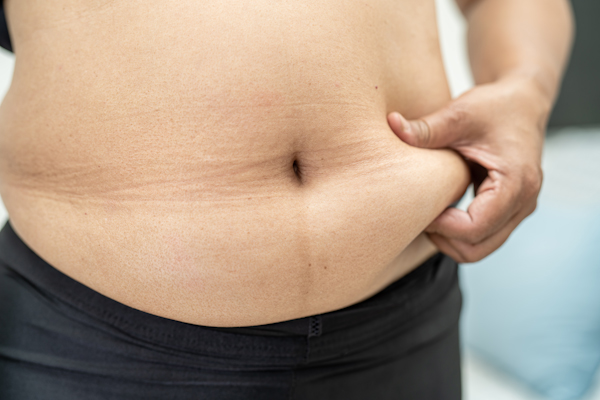
Significant weight loss: Patients who have experienced major weight loss may already have stretched skin that cannot fully contract after fat removal.
Pregnancy-related changes: Pregnancy can stretch the abdominal skin and affect the underlying tissues. Liposuction alone may not address the resulting excess skin.
Pre-existing skin laxity: If loose skin is already present before surgery, removing the underlying fat may make it more visible rather than correcting it.
This is why evaluating skin quality before surgery is just as important as assessing the amount and distribution of fat.
liposuction-sonrasi-cilt-sarkmasi
Can Skin Tighten Naturally After Liposuction?
Yes, the skin may tighten naturally to some extent after liposuction, particularly when the patient has good skin elasticity and only mild skin laxity.
Following fat removal, the skin gradually adjusts to the new body contours. This process is influenced by the patient’s natural healing response, skin structure, and the amount of volume removed.
However, natural skin contraction has limitations. It cannot reliably eliminate significant excess skin or correct pronounced sagging.
Patients should also understand that recovery is gradual. Swelling and changes in tissue firmness can affect how the treated area looks during the healing period. The final contour should not be judged too early.
How Long Does It Take for Skin to Tighten After Liposuction?
Skin adaptation takes time, and the recovery process varies between patients.
During the initial recovery period, swelling and fluid retention can make the treated area appear uneven or feel firm. As healing progresses, swelling gradually decreases and the underlying contours become more visible.
Skin contraction and tissue remodelling may continue over the following months. The exact timeline depends on the treatment area, the extent of liposuction, individual healing characteristics, and skin elasticity.
It is important not to interpret early post-operative looseness as the final result. Your surgeon can assess whether the skin is still adapting or whether residual laxity may require further treatment.

liposuction-sonrasi-cilt-toparlanmasi
Who Is More Likely to Experience Loose Skin After Liposuction?
Some patients have a higher likelihood of developing noticeable skin laxity after fat removal.
This may include:
- Patients with naturally low skin elasticity.
- Individuals who have experienced significant weight loss.
- Patients with a history of repeated weight fluctuations.
- Individuals with existing loose skin before surgery.
- Patients undergoing larger-volume fat removal.
- Patients with age-related changes in skin firmness.
The treatment area also matters because skin thickness, elasticity, and underlying tissue support differ throughout the body.
Loose Skin After Abdominal Liposuction
The abdomen is one of the most common areas treated with liposuction. However, patients with loose abdominal skin, stretch marks, or skin changes following pregnancy or significant weight loss may not achieve a firm appearance with liposuction alone.
If there is considerable excess skin, a tummy tuck may be more appropriate.
Loose Skin After Arm Liposuction
The upper arms can be particularly challenging when skin elasticity is limited. Removing fat may improve arm volume, but it does not necessarily correct hanging skin.
Patients with significant upper-arm laxity may benefit more from an arm lift, which removes excess skin and reshapes the upper arm.
deri-sarkmasi-ve-cilt-elastikiyeti
Loose Skin After Thigh Liposuction
The inner thighs are another area where skin laxity can become noticeable after fat removal. The amount of skin contraction depends on the patient’s existing skin quality and the extent of fat removal.
When excess skin is significant, a thigh lift may be considered to improve the contour.
Loose Skin After Double Chin Liposuction
The skin beneath the chin is relatively delicate, and its ability to contract varies between individuals. Patients with good elasticity may experience a smoother contour after fat removal, while those with existing neck laxity may continue to have loose skin.
In some cases, an additional skin-tightening or surgical lifting procedure may need to be considered.
How Can the Risk of Loose Skin Be Reduced Before Liposuction?
Although loose skin cannot always be prevented, careful patient selection and surgical planning can help reduce the likelihood of an unsatisfactory contour.
Before recommending liposuction, the surgeon should assess:
- Skin elasticity and overall skin quality.
- The amount and distribution of excess fat.
- Existing skin laxity.
- Previous weight changes and pregnancy history.
- The patient’s body proportions and expectations.
The amount of fat removed and the surgical technique should be selected according to the patient’s anatomy rather than based solely on how much fat can be extracted.
It is also important to understand that no surgical technique can guarantee complete skin tightening. A realistic treatment plan should take the limitations of the skin into account.
Does Wearing a Compression Garment Prevent Loose Skin?
Compression garments are commonly recommended after liposuction. They help support the treated areas and manage post-operative swelling during recovery.
They can also provide comfort and help the tissues settle as healing progresses.
However, compression garments do not remove excess skin and cannot guarantee that loose skin will tighten. Their role is supportive, and they should be worn according to the surgeon’s instructions.
Does Massage Help Tighten Skin After Liposuction?
Post-operative massage and lymphatic drainage may be recommended in selected patients to help manage swelling and support recovery.
However, massage does not remove significant excess skin or replace a surgical lifting procedure. It should not be considered a guaranteed method of tightening the skin.
Not every patient requires post-operative massage, and the timing and suitability of these treatments should be determined by the surgeon.
Does Vaser Liposuction Tighten the Skin?
Vaser liposuction is an ultrasound-assisted liposuction technique that uses ultrasonic energy to help separate fat cells before their removal.
It is often discussed in relation to skin tightening because of the energy used during the procedure. However, Vaser liposuction should not be presented as a guaranteed solution for loose skin.
Although some patients may experience a degree of skin retraction, the result depends on individual skin characteristics, the treatment area, and the extent of fat removal.
Vaser is not universally superior to other liposuction techniques, and it cannot reliably correct significant skin excess.
Does Laser-Assisted Liposuction Prevent Skin Sagging?
Laser-assisted liposuction uses laser energy as part of the fat-removal process. The thermal effect may influence the surrounding tissues, but the degree of skin contraction varies.
It is important to distinguish between a possible improvement in mild skin laxity and the removal of excess skin. Laser-assisted techniques cannot be considered equivalent to surgical skin removal.
The most appropriate technique depends on the patient’s anatomy and treatment goals, rather than the assumption that one technology will guarantee tighter skin.
What Can Be Done About Loose Skin After Liposuction?
If loose skin remains after liposuction, the appropriate treatment depends on its severity, location, and the patient’s overall anatomy.
In many cases, it is sensible to allow sufficient time for swelling to resolve and the tissues to settle before considering additional treatment.
Non-Surgical Skin Tightening
For patients with mild skin laxity, certain non-surgical skin-tightening treatments may be considered.
These treatments aim to improve skin firmness, but their effectiveness varies. They are generally not suitable for correcting significant amounts of excess skin.
Surgical Skin Removal
When loose skin is more pronounced, a surgical lifting procedure may provide a more predictable correction.
Depending on the treatment area, options may include:
- Tummy tuck: Removes excess abdominal skin and may include tightening of the abdominal muscles or supporting fascia when indicated.
- Arm lift: Removes excess skin from the upper arms to create a firmer contour.
- Thigh lift: Removes excess skin from the thighs, particularly the inner thigh area.
- Combined body contouring: Multiple procedures may be considered together in suitable patients, depending on their health, anatomy, and surgical risk.
The best option should be determined after an individual surgical assessment.
Liposuction vs. Tummy Tuck: What Is the Difference?
Liposuction and tummy tuck surgery address different concerns, although they may sometimes be performed together.
Liposuction focuses on removing localised fat deposits to improve body contours. It does not remove significant excess skin or directly correct abdominal muscle separation.
A tummy tuck, on the other hand, is designed to remove excess abdominal skin. Depending on the patient’s needs, it may also include repair or tightening of the underlying abdominal muscles and supporting tissues.
Patients with good skin elasticity and localised abdominal fat may be suitable for liposuction alone. Those with significant loose skin, particularly after pregnancy or major weight loss, may be better candidates for a tummy tuck.
Choosing between these procedures requires an assessment of both the skin and the underlying tissues.
Can Liposuction and a Skin Lift Be Performed Together?
In selected patients, liposuction and a skin-lifting procedure can be combined to address both excess fat and loose skin.
For example, a tummy tuck may be combined with liposuction of surrounding areas to improve overall body proportions. Similarly, liposuction may be incorporated into an arm or thigh lift when appropriate.
However, combining procedures increases the overall surgical scope. The patient’s health, operative time, recovery requirements, and potential risks must all be carefully evaluated.
Not every patient is a suitable candidate for multiple procedures in one operation.
Can Weight Gain Cause Loose Skin Again After Liposuction?
Liposuction permanently removes some fat cells from the treated area. However, the remaining fat cells can still increase in size if the patient gains weight.
Significant weight fluctuations can therefore affect the long-term body contour and may contribute to changes in skin appearance.
Maintaining a relatively stable weight after surgery helps preserve the results. Liposuction should be considered a body contouring procedure rather than a weight-loss treatment.
The Importance of Skin Elasticity Assessment Before Liposuction
One of the most important steps in planning liposuction is evaluating whether the skin is likely to adapt to the expected reduction in fat volume.
At MD Aesthetics, Dr. Murat Diyarbakırlıoğlu considers factors such as skin quality, fat distribution, existing laxity, body proportions, weight history, and the patient’s expectations when planning body contouring surgery.
This assessment helps determine whether liposuction alone is appropriate or whether an additional procedure may be needed to address excess skin.
The goal is not simply to remove fat, but to achieve a balanced body contour while taking the limitations of the skin and underlying tissues into account.