





What Is a Hair Transplant and How Does It Work?
The basic principle of a hair transplant is to transfer hair follicles from a suitable donor area to areas affected by hair loss. The donor area is usually located at the back and sides of the scalp, where the hair follicles tend to be more resistant to hair loss. However, the donor area must be individually assessed, as the number of grafts that can safely be harvested varies from person to person.
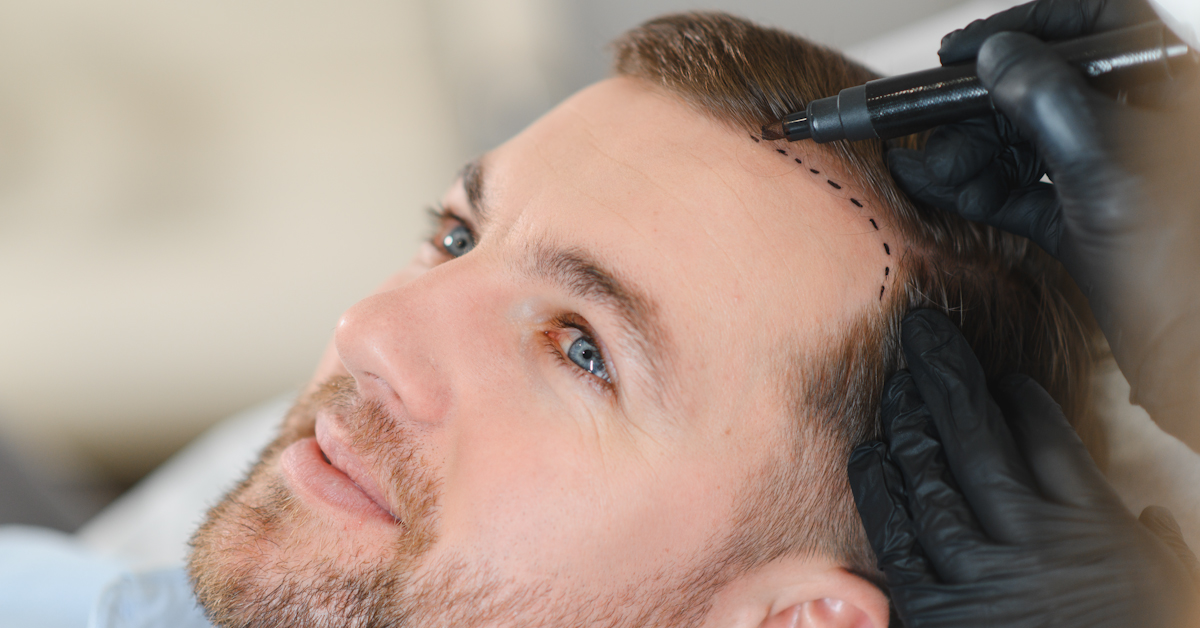
Before a hair transplant, the hair and scalp are evaluated. The pattern and degree of hair loss, donor density, and available graft capacity are assessed. The hairline and overall transplant plan are then designed according to the patient’s facial proportions, existing hair, and individual characteristics. At this stage, it is important to plan not only how many grafts will be used, but also the direction, angle, and distribution of the transplanted hair.
During the procedure, grafts are harvested from the predetermined donor area and prepared for implantation. The recipient area is then prepared according to the treatment plan, and the grafts are placed in the appropriate areas. The natural direction and angle of hair growth, the existing hair, and the desired density are taken into consideration.
A hair transplant is therefore not simply a process of moving grafts from one part of the scalp to another. Hairline design, density, direction, graft distribution, and long-term planning all contribute to achieving a natural-looking result.
What Are the Different Hair Transplant Methods?
The main hair transplant methods and techniques commonly discussed today include FUE hair transplant, DHI hair transplant, Sapphire FUE, and FUT hair transplant. However, it is important to understand that these terms do not all refer to exactly the same aspect of the procedure.
FUE, or Follicular Unit Extraction, primarily describes how individual follicular units are extracted from the donor area. DHI, or Direct Hair Implantation, describes an implantation approach in which harvested grafts are placed using a specialized implanter pen. Therefore, DHI should not be presented as a completely independent method of harvesting hair follicles from the donor area.
Sapphire FUE refers to the use of sapphire-tipped instruments during the creation of recipient channels when performing FUE. FUT, or Follicular Unit Transplantation, is a different extraction approach in which a strip of scalp is surgically removed from the donor area and then divided into individual follicular units.
Understanding these distinctions is important when comparing the types of hair transplant methods, because the terminology can otherwise make different stages of the same procedure appear to be completely separate techniques.
What Is an FUE Hair Transplant?
FUE stands for “Follicular Unit Extraction.” In an FUE hair transplant, individual follicular units are extracted from the donor area and prepared for transplantation into areas affected by hair loss.
Before extraction, the donor area is carefully evaluated to determine the available graft capacity and the appropriate areas from which grafts can be harvested. Proper donor area planning is important because excessive harvesting can unnecessarily reduce the density of the donor area.
Once the grafts have been harvested, they are prepared according to the planned implantation strategy. The recipient area may then be prepared by creating channels before the grafts are placed. The angle and direction of the transplanted hair are planned according to the natural growth pattern and the existing hair.
FUE is one of the most widely used hair transplant methods today and can be combined with different approaches to graft implantation depending on the patient’s anatomy and treatment plan.

What Is a DHI Hair Transplant?
DHI stands for “Direct Hair Implantation” and refers to an implantation approach in which harvested grafts are placed into the recipient area using specialized implanter pens. Choi-type implanter pens may be used for this purpose.
During a DHI hair transplant, the grafts are loaded into the implanter pen and then placed into the recipient area at the planned angle and direction. Careful control of the hair direction and angle is particularly important when working between existing hairs or when creating a natural transition along the hairline.
It is important to understand that DHI does not, by itself, describe how the grafts are harvested from the donor area. In many applications, the grafts are extracted according to FUE principles and then implanted using a DHI approach. For this reason, FUE and DHI should not always be understood as two completely independent hair transplant methods.
What Is Sapphire FUE?
Sapphire FUE refers to an FUE hair transplant technique in which sapphire-tipped instruments are used to create the recipient channels into which the harvested grafts will be placed. The main distinction relates to the instrument used during the channel-opening stage rather than to a completely different method of graft extraction.
During channel creation, the channels need to be planned according to the natural direction of hair growth, the desired density, and the overall hairline design. Sapphire-tipped instruments can be used as one of the technical options during this stage.
However, the use of sapphire tips alone does not mean that Sapphire FUE will necessarily produce better results for every patient. The quality of the treatment plan, appropriate patient selection, donor area management, graft handling, and correct placement of the follicles remain important factors in the final result.
The relationship between Sapphire FUE and conventional FUE is therefore important to understand. Both may use the FUE principle for graft extraction, while the main difference is related to the instruments and approach used when preparing the recipient channels.
What Is FUT Hair Transplant?
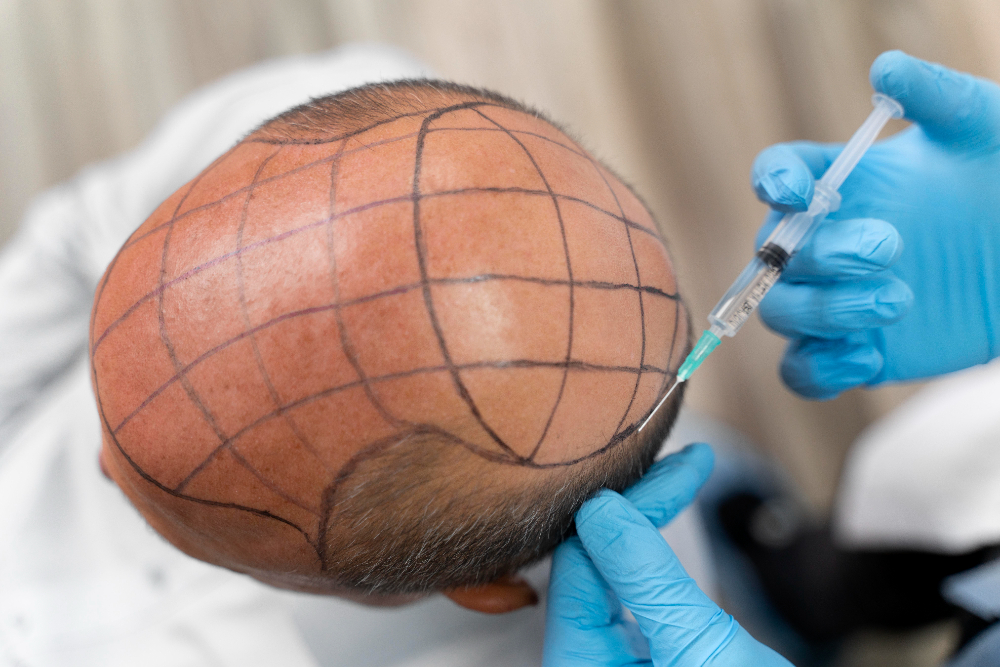
FUT stands for “Follicular Unit Transplantation.” In this technique, a strip of hair-bearing scalp is surgically removed from the donor area. The strip is then divided into individual follicular units, which are prepared for transplantation.
The main difference between FUT and FUE is the way the grafts are harvested. With FUE, individual follicular units are extracted separately, whereas FUT involves removing a strip of scalp and subsequently separating it into follicular units.
Because of this difference in surgical approach, FUT and FUE may also differ in terms of the donor area scar and the recovery process. FUT is an older hair transplant method and is used less commonly today than FUE in many settings, but it remains part of the development and history of modern hair transplantation.
The appropriate approach depends on the patient’s donor area, pattern of hair loss, available grafts, and overall surgical assessment.
What Is the Difference Between FUE and DHI?
Understanding the difference between FUE and DHI requires recognizing that the two terms primarily describe different aspects of the hair transplant procedure.
FUE describes the extraction of individual follicular units from the donor area. During a conventional FUE approach, the grafts are harvested individually and may then be placed into recipient channels that have been prepared in advance.
DHI describes an implantation approach in which the harvested grafts are placed using a specialized implanter pen. Depending on the technique used, channel creation and implantation can be incorporated into the implantation process.
This means that DHI is not necessarily an alternative to FUE in the sense of two completely separate procedures. Grafts can be harvested using the FUE principle and then implanted using a DHI approach. The most appropriate implantation strategy depends on factors such as the extent of hair loss, donor density, the number of grafts required, the condition of existing hair, and the desired hairline and density.
FUE vs DHI Hair Transplant: Which Is Better?
The question “FUE or DHI?” does not have one universal answer. Rather than assuming that one technique is better for everyone, the focus should be on determining which approach is most appropriate for the individual patient’s anatomy, hair loss pattern, and treatment goals.
The width and pattern of hair loss, donor hair density, required graft number, hair shaft characteristics, existing hair, and the desired hairline and density can all influence the treatment plan. The direction and angle of hair placement are particularly important when transplantation is performed between existing hairs.
For this reason, the best hair transplant technique should be determined after an appropriate assessment and individualized planning. The name of the technique alone does not determine the quality of the result. The overall surgical plan and how well it corresponds to the patient’s anatomy are equally important.
How Is a Hair Transplant Method Chosen?
Choosing a hair transplant method should involve more than deciding between FUE and DHI. The first step is to assess the type and extent of hair loss, the capacity of the donor area, and the condition of the existing hair.
Age is also an important consideration. In patients with hair loss that begins at a younger age, the possibility of continued hair loss over the following years needs to be taken into account. The hairline and graft distribution should therefore be planned with potential future hair loss in mind.
Hair thickness, scalp condition, donor density, and the patient’s expectations also influence the treatment plan. The goal is not simply to transplant the maximum possible number of grafts, but to use the available donor supply responsibly while creating a natural and balanced appearance.
Long-term planning is particularly important in hair transplantation because the hair loss process may continue in areas that have not been transplanted.
Who Is a Hair Transplant Suitable For?
A hair transplant is not automatically suitable for everyone experiencing hair loss. The cause and pattern of hair loss, as well as the adequacy of the donor area, should first be assessed. An adequate supply of suitable donor follicles is one of the fundamental factors in determining whether a transplant can be planned successfully.
The progression of hair loss, the patient’s age, general health, and the possibility of future hair loss are also considered. Realistic expectations are equally important. The amount of density that can be achieved depends largely on the available donor supply, and it may not always be possible to create the density a patient initially imagines.
If there may be an underlying medical cause for the hair loss, this should be evaluated before proceeding with a hair transplant. Understanding the reason for the hair loss allows appropriate medical and surgical options to be considered more accurately.
How Is the Hairline Planned Before a Hair Transplant?
A natural-looking hair transplant depends not only on the number of grafts used but also on the design of the hairline. The hairline should be planned in harmony with the patient’s facial proportions, age, existing hair, and the possibility of future hair loss.
Facial proportions, the existing hairline, donor capacity, and the natural direction of hair growth are considered during planning. Creating an excessively low hairline may initially produce a denser appearance, but it can look unnatural in later years if the patient’s existing hair continues to recede.
For this reason, hairline design is not simply about covering the area affected by hair loss. The relationship between the forehead and hairline, overall facial balance, age, donor capacity, and the patient’s long-term appearance should all be considered.
A carefully planned hairline should follow the natural proportions of the face rather than appearing artificially straight or excessively dense. Facial proportions therefore play an important role in creating a balanced and natural-looking hair transplant result.
What Is the Recovery Process Like After a Hair Transplant?
After a hair transplant, temporary redness, sensitivity, crusting, and mild swelling may occur on the scalp. The duration and intensity of these effects vary from person to person and may also depend on the technique used.
Protecting the newly transplanted grafts during the initial recovery period is particularly important. Patients should follow the specific instructions provided for washing the hair and scalp, avoid unnecessary trauma to the treated area, and follow the recommended aftercare plan.
The recovery process depends on factors such as the technique used, the size of the treated area, and the individual’s healing characteristics. For this reason, postoperative instructions should be followed carefully throughout the recovery period.
When Does Hair Grow After a Hair Transplant?
The results of a hair transplant do not appear immediately after the procedure. During the early stages, some of the transplanted hair shafts may temporarily shed. This can occur as part of the normal hair growth and recovery process following transplantation.
New hair growth from the transplanted follicles develops gradually over time. Density and overall appearance improve progressively rather than appearing all at once. This means that the final outcome of a hair transplant requires time to develop.
The timeline varies from person to person because hair growth is influenced by the natural hair cycle, the treatment area, and individual characteristics. The final appearance therefore needs to be assessed after sufficient time has allowed the transplanted follicles to progress through their growth cycle.
Is a Hair Transplant Permanent?
The long-term behavior of transplanted follicles should be considered separately from the future of the patient’s existing, non-transplanted hair. Transplanted hair follicles can remain for a long period of time, but this does not mean that hair loss will stop in other areas of the scalp.
When hair loss is related to genetic factors, it may continue over time. This possibility should therefore be considered when designing the hairline and deciding how to use the available donor grafts.
In some patients, continued hair loss in the non-transplanted areas may eventually lead to the need for additional treatment or another hair transplant. A hair transplant should therefore be viewed as part of a long-term hair restoration plan rather than simply a procedure designed to cover the currently visible areas of hair loss.
What Should You Consider When Choosing a Hair Transplant Method?
Patients should consider more than simply asking whether FUE or DHI is better. Appropriate patient selection, preservation of the donor area, natural hairline design, and correct placement of grafts at appropriate angles and directions are all important factors in the treatment plan.
The donor area should not be overharvested, as preserving sufficient donor hair for potential future hair loss is an important part of long-term planning. Similarly, designing the hairline according to the patient’s facial proportions and age helps the transplanted hair remain compatible with the surrounding hair as the patient gets older.
The experience of the medical team performing the procedure and the quality of postoperative follow-up should also be considered. A hair transplant is not limited to the surgical procedure itself. Assessment and planning before surgery, the technical execution of the procedure, and postoperative care are all important components of the treatment process.
What Should You Consider When Choosing a Hair Transplant Method?
Patients should consider more than simply asking whether FUE or DHI is better. Appropriate patient selection, preservation of the donor area, natural hairline design, and correct placement of grafts at appropriate angles and directions are all important factors in the treatment plan.
The donor area should not be overharvested, as preserving sufficient donor hair for potential future hair loss is an important part of long-term planning. Similarly, designing the hairline according to the patient’s facial proportions and age helps the transplanted hair remain compatible with the surrounding hair as the patient gets older.
The experience of the medical team performing the procedure and the quality of postoperative follow-up should also be considered. A hair transplant is not limited to the surgical procedure itself. Assessment and planning before surgery, the technical execution of the procedure, and postoperative care are all important components of the treatment process.